
Brentford vs Liverpool: The Tactical Clash Ruining Big-Six Gameplans
Brentford FC vs Liverpool FC





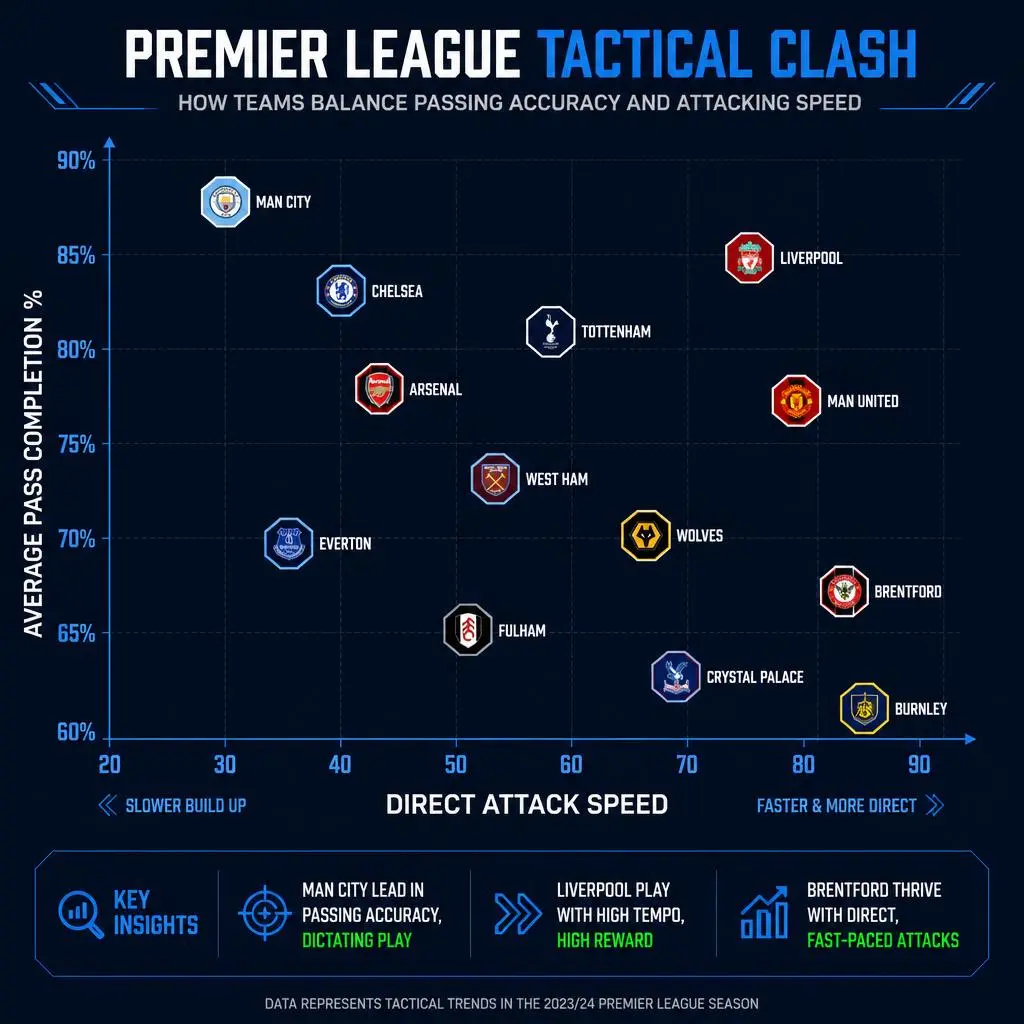
The modern Premier League doesn't care about your wage bill. You can stack £100 million midfielders together and control 70% of the ball, but if you don't have a plan for second balls or 30-yard long throws, you're going to get exposed. Matches like Brentford vs Liverpool prove that point every single time they kick off.
When Jurgen Klopp was still in charge, he routinely called Brentford's setup a nightmare to play against, and that tactical headache hasn't vanished. When the Bees host the Reds at the Gtech Community Stadium or travel to Anfield, the usual Big Six hierarchy goes straight out the window. It isn't luck. It's a collision between elite individual talent and hyper-efficient, data-led coaching.
Why Does Brentford vs Liverpool Keep Turning Into Chaos?
On paper, it looks like a routine mismatch: a global powerhouse built on high-volume passing facing a club operating on a fraction of their budget. On the grass, it’s a total style clash.
Liverpool want to push their backline up to the halfway line, lock you into your own box, and counter-press until you snap. Brentford couldn't care less about having the ball. They willingly sit in a compact low block, choke out central passing lanes, and wait for the precise second you overcommit.
The Spatial Trap
Liverpool's entire system relies on finding pockets of space between the lines for their playmakers. Brentford’s answer is simple: delete those pockets.
By dropping into a rigid 5-3-2 or 4-5-1 out of possession, Thomas Frank’s side forces the ball wide.
- They pack the central channel so tightly that passing into the midfield feels like throwing a dart through a keyhole.
- They double up on wide forwards, turning dangerous 1v1 situations into crowded 2v1 dead ends.
- They invite crosses on their own terms, knowing their center-backs will head those away eight times out of ten.
The moment Liverpool get impatient and push an extra fullback forward to break the deadlock, the trap springs. Brentford clear high into the channels, their forwards run the channels, and suddenly Liverpool's defenders are sprinting 50 yards back toward their own goal in panic mode.
It Isn't Just Liverpool: The Bigger Pattern
This isn't a one-off tactical gimmick saved exclusively for Merseyside. Look back at fixtures like Man United vs Brentford over the last few seasons and you see the exact same script unfold.
Manchester United have repeatedly stumbled against this exact setup for the same reason: an inability to defend direct verticality. Brentford isolate vulnerable fullbacks, win the initial aerial duel, and swarm the area where the second ball drops.
While top-four contenders rack up hundreds of sideways passes, the quality of scoring chances (xG) routinely favors Brentford's directness. They don't waste time admiring their own possession.
- Force a turnover in the middle third through aggressive dual-tackling.
- Play vertically within two seconds to bypass the opposition’s counter-press entirely.
- Flood the box with late-arriving runners to attack loose balls.
Weaponizing Dead Balls
Set pieces aren't an afterthought for Brentford they are a primary goal-scoring strategy. Few coaching staffs in world football design dead-ball routines with the level of detail seen at the Gtech. For a team like Liverpool, who prefer a controlled, fluid rhythm, these situations disrupt everything.
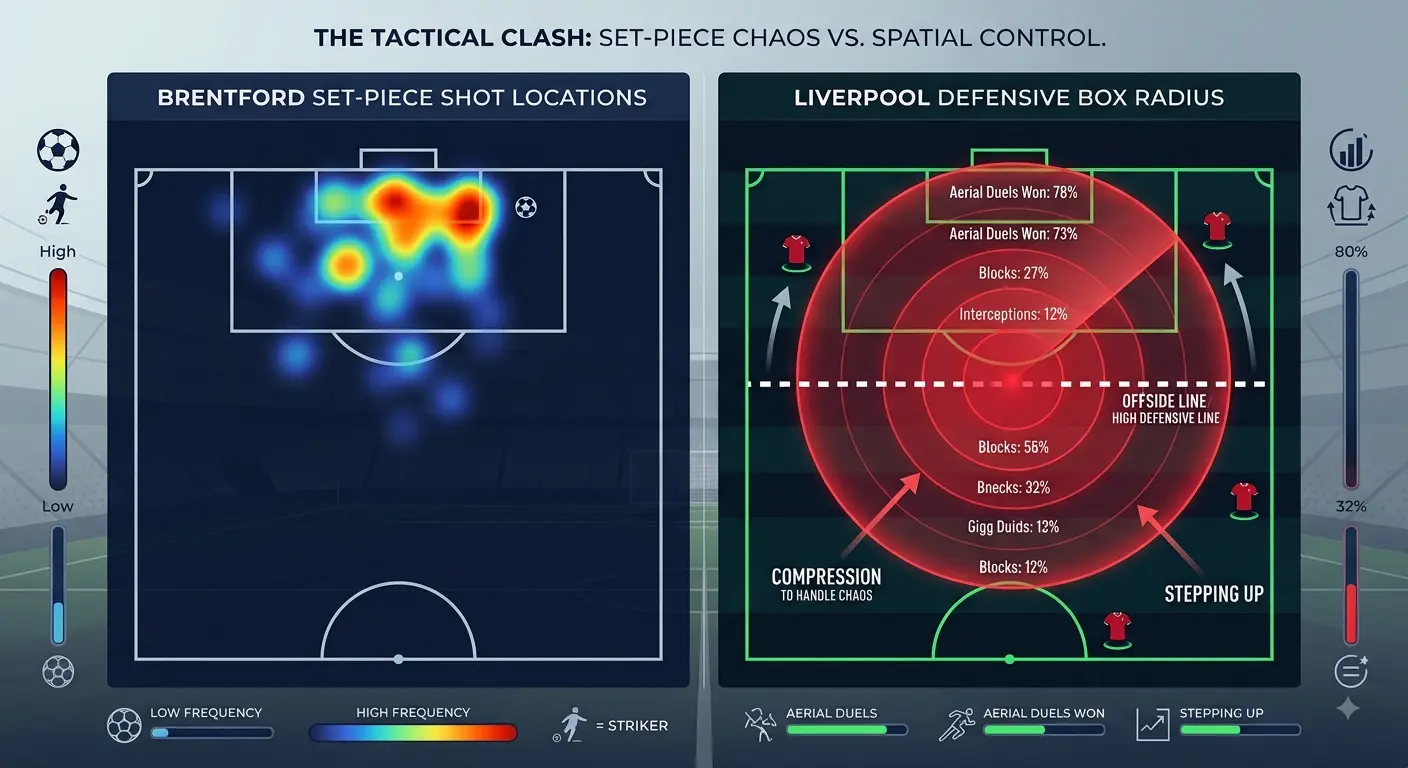
It isn't just about throwing tall players into the box. Brentford use specific blocking schemes to clear out space at the back post, flick near-post headers across the face of goal, and launch flat long throws directly onto the six-yard line.
When Liverpool drop points in these matches, it's rarely because they got sliced open by intricate passing. It's usually because they couldn't clear a second-phase corner or lost track of a runner after a long throw chaos box sequence.
What the Numbers Say Moving Forward
If you want to figure out how the next fixture goes, ignore raw possession numbers. Look at field tilt, non-penalty xG, and pass distance.
When Liverpool manage to keep Brentford under five direct transition entries per 90 minutes, they usually win comfortably. The moment the game turns into a basketball match with end-to-end transitions, Brentford’s physical engine takes over and the playing field flattens out completely.
It’s tactical chess masked as direct, physical English football. Liverpool bring elite technical talent; Brentford bring structural discipline and set-piece violence.
Comments
Leave a Comment
Comments
What people are saying
Leave a Comment
Comments are reviewed before they appear.
Comments
.webp)